Blog

  • 10 Fascinating Facts About Johann Sebastian Bach

    Facts on Johann Sebastian Bach. Johann Sebastian Bach is a name that is synonymous with classical music. He is one of the most prominent composers of the Baroque era and has contributed immensely to the development of Western classical music. Bach was a prolific composer, producing over 1,100 works during his lifetime. In this article, we will explore 10 fascinating facts about Johann Sebastian Bach.

    10 Fascinating Facts About Johann Sebastian Bach
    Kiwi63, CC BY-SA 4.0
    https://creativecommons.org/licenses/by-sa/4.0via Wikimedia Commons

    1. Bach came from a family of musicians Johann Sebastian Bach was born in Eisenach, Germany, in 1685. He came from a family of musicians, with his father, grandfather, and uncles all working as musicians. Bach was the youngest of eight children, and his family provided him with an early education in music.

    2. He was orphaned at a young age Bach’s parents died when he was only ten years old. He went to live with his older brother, who was also a musician. It was during this time that Bach honed his skills as a musician and began composing his own music.

    3. He was a master of the keyboard Bach was a virtuoso on the keyboard, and his compositions for the instrument are still studied and performed today. His keyboard works include the Goldberg Variations, the Well-Tempered Clavier, and the Brandenburg Concertos.

    4. Bach was a prolific composer During his lifetime, Bach composed over 1,100 works, including sacred and secular music. His works include cantatas, concertos, chamber music, keyboard music, and orchestral suites.

    5. He was a devout Lutheran Bach was a devout Lutheran, and his music was heavily influenced by his religious beliefs. He held various positions as a church musician throughout his career and composed many sacred works, including cantatas, oratorios, and masses.

    6. Bach’s music was not appreciated during his lifetime Despite his prolific output, Bach’s music was not widely appreciated during his lifetime. It wasn’t until the 19th century that his music began to gain wider recognition and appreciation.

    7. Bach’s music influenced many composers Bach’s music had a profound influence on many composers, including Mozart, Beethoven, and Chopin. His contrapuntal style, harmonic complexity, and use of counterpoint continue to influence composers today.

    8. Bach was a family man Bach was married twice and had 20 children, 10 of whom survived to adulthood. Many of his children went on to become musicians, and his son Johann Christian Bach became a successful composer in his own right.

    9. Bach’s music is still popular today Bach’s music is still popular today, and his works are regularly performed and recorded. His music has been adapted for numerous mediums, including film, television, and video games.

    10. Bach’s legacy continues Bach’s music has had a lasting impact on Western classical music, and his legacy continues today. His compositions are still studied and performed by musicians around the world, and his influence on music will be felt for generations to come.

    In conclusion, Johann Sebastian Bach was a remarkable composer who left an indelible mark on the world of classical music. His keyboard works, sacred music, and contributions to the Baroque era have ensured his place in music history. As we continue to study and perform his music, we can appreciate the genius of Bach and his enduring legacy.

  • How Minimalism is Revolutionizing the Music Industry

    In a world that is increasingly dominated by complexity and clutter, the concept of minimalism has become more appealing than ever. And it’s not just in the world of home decor or fashion, but also in the music industry. Minimalism in music is a style that emphasizes simplicity, repetition, and the use of sparse instrumentation. It’s a philosophy that has been around for decades, but it’s only in recent years that it has gained significant traction. From the ambient soundscapes of Brian Eno to the stripped-down acoustic ballads of Bon Iver, minimalist music has captured the imagination of listeners around the world. This trend is not just a fad or a passing phase, but a true revolution in the music industry. In this article, we’ll explore the beauty of simplicity and how it’s changing the way we listen to and appreciate music.

    The history of minimalism in music

    Minimalism in music emerged in the 1960s as a reaction against the complex and chaotic music of the time. It was pioneered by composers such as Terry Riley, La Monte Young, and Steve Reich, who sought to simplify music by stripping it down to its basic elements. They used repetition, slow-moving harmonies, and simple melodies to create a new kind of music that was both meditative and hypnotic. Minimalist music gained popularity in the 1970s, with the work of composers such as Philip Glass and John Adams. Their music was characterized by a pulsing rhythm and a repetitive structure, which created a sense of timelessness and transcendence.

    The Beauty of Simplicity: Characteristics of minimalist music

    Minimalist music is characterized by simplicity, repetition, and the use of sparse instrumentation. It often features a limited number of musical elements, such as a single melody, a simple chord progression, or a repetitive rhythm. This creates a sense of space and clarity, which allows the listener to focus on the music in a more direct and intuitive way. Minimalist music is also often meditative and contemplative, with a slow and steady pace that encourages deep listening and reflection.

    How minimalism is revolutionizing the music industry

    Minimalism is revolutionizing the music industry by challenging the conventional wisdom that more is always better. It’s showing us that simplicity and restraint can be just as powerful and effective as complexity and excess. Minimalist music is gaining popularity among listeners who are tired of the overproduced and formulaic music that dominates the airwaves. They are seeking out music that is more authentic, honest, and emotionally resonant. In response, artists are embracing minimalism as a way to connect with their audiences on a deeper level.

    The rise of ambient music

    One of the most significant trends in minimalist music is the rise of ambient music. Ambient music is a genre of music that is characterized by its atmospheric and immersive qualities. It often features long, slowly evolving soundscapes that create a sense of timelessness and spaciousness. Ambient music is often used as a background or foreground for other activities such as meditation, relaxation, or work.

    Popularity of lo-fi music

    Minimalism and the popularity of lo-fi musichttps://en.wikipedia.org/wiki/Lo-fi_music

    Another trend in minimalist music is the popularity of lo-fi music. Lo-fi music is characterized by its low-fidelity sound quality, which gives it a raw and unpolished feel. It often features simple melodies, sparse instrumentation, and a DIY aesthetic. Lo-fi music has become popular among listeners who are seeking out music that is more authentic and intimate. It’s often associated with the indie music scene, and it’s been embraced by artists such as Mac DeMarco, King Krule, and Alex G.

    The impact of minimalism on music production

    Minimalism is also having a significant impact in music production. With the rise of digital technology, it’s now possible to create music with a minimal amount of equipment and resources. This has enabled artists to produce music that is more personal and expressive, without the need for expensive studios or equipment. It’s also led to a democratization of music production, with more and more artists able to create and distribute their music independently.

    Minimalism in album artwork and design

    Minimalism is not just influencing the music itself, but also the way it’s presented to the world. Minimalist album artwork and design have become increasingly popular in recent years. This is characterized by a simple and minimalist aesthetic, with a focus on clean lines, bold typography, and negative space. Minimalist album artwork is often seen as more timeless and iconic than more complex designs. It’s also more cost-effective, which makes it appealing to independent artists and labels.

    Minimalism and the live music experience

    Minimalism is also changing the live music experience. Many artists are now embracing a more stripped-down and intimate approach to live performance. They are performing in smaller venues, with fewer instruments and equipment. This creates a more personal and immersive experience for the audience, and it allows the artist to connect with their fans on a more direct and emotional level.

    The future of minimalism in music

    The future of minimalism in music is bright. As the world becomes more complex and cluttered, the appeal of simplicity and clarity will only grow stronger. Minimalist music will continue to challenge our assumptions about what music is and what it can be. It will inspire new generations of artists to create music that is more honest, authentic, and emotionally resonant.

    Conclusion

    Minimalism is a philosophy that is revolutionizing the music industry. It’s showing us that simplicity and restraint can be just as powerful and effective as complexity and excess. Minimalist music is gaining popularity among listeners who are seeking out music that is more authentic, honest, and emotionally resonant. It’s encouraging artists to embrace a more personal and expressive approach to music production, and it’s changing the way we experience live music. In a world that is increasingly dominated by complexity and clutter, minimalism offers us a refreshing and inspiring alternative.

  • Artificial Intelligence Songwriters: Can Machines Create Meaningful Music?

    Artificial Intelligence

    Artificial Intelligence Songwriters: Music has been an integral part of human culture for thousands of years, with countless artists and composers producing timeless works of art that continue to inspire and move us. However, the process of creating music is often challenging and time-consuming, requiring a high level of skill and creativity. Artificial intelligence (AI) is now being used to assist in the process of songwriting, opening up new possibilities for music creation and challenging our understanding of what it means to be a musician.

    AI songwriting involves the use of machine learning algorithms to generate lyrics, melodies, and even entire songs. The algorithms are trained on large datasets of existing music, analyzing patterns and structures to create new pieces of music that are similar in style and tone. The result is a piece of music that is created entirely by a machine, with little to no human input.

    One of the primary advantages of AI songwriting is its efficiency.

    The process of creating a song can be streamlined and automated using AI, allowing for faster production times and lower costs. Additionally, AI songwriting can be customized to match the specific style and tone of the music, ensuring a cohesive and immersive listening experience.

    However, the question remains: can machines create meaningful music? Music is often associated with emotional expression and human experience, with artists drawing on personal experiences and emotions to create their art. While AI can analyze existing music and generate new pieces that are similar in style and structure, it lacks the emotional depth and personal touch of a human songwriter.

    Despite these limitations, AI songwriting has already made significant strides in the music industry. In 2016, the first AI-generated pop song was released by Sony CSL Research Laboratory. The song, titled “Daddy’s Car,” was created using an AI system called Flow Machines, which analyzed a database of existing songs to create a new composition in the style of The Beatles.

    The success of “Daddy’s Car” demonstrates the potential of AI songwriting to create music

    that is both catchy and commercially viable. However, critics have argued that the song lacks the emotional depth and nuance of a human-composed piece of music.

    In addition to pop music, AI songwriting is also being explored in other genres, including classical and jazz. In 2020, the first AI-generated piano concerto was performed by the London Symphony Orchestra. The concerto, created using an AI system called AIVA (Artificial Intelligence Virtual Artist), was composed in the style of Mozart and was received positively by critics and audiences alike.

    The use of AI in songwriting is not limited to just creating new music.

    The use of AI in songwriting is not limited to just creating new music.
    Max Gruber, CC BY 4.0
    https://creativecommons.org/licenses/by/4.0via Wikimedia Commons

    AI can also be used to assist in the songwriting process by suggesting chord progressions, melodies, and even lyrics. This can be particularly useful for musicians who are struggling with writer’s block or who are looking to experiment with new styles and genres.

    The future of AI songwriting is still uncertain, but there are already exciting developments in the field. Researchers at Sony CSL Research Laboratory are working on a new AI system called FlowComposer, which is designed to assist human songwriters in the creative process. The system can analyze a songwriter’s existing work and suggest new melodies and harmonies that match their style and tone.

    In conclusion, AI songwriting is a rapidly evolving field that is challenging our understanding of what it means to be a musician. While there are still limitations to the technology, the success of AI-generated pop songs like “Daddy’s Car” and the AI-generated piano concerto demonstrate the potential for AI to create music that is both commercially viable and artistically compelling. As the technology continues to develop, we may see a future where AI plays an even greater role in the songwriting process, changing the way we think about

  • The Magic of Music: How Harry Potter Composer John Williams Brought the Wizarding World to Life

    Discover the magic behind the music of Harry Potter with this in-depth look at composer John Williams. Learn how his iconic score brought the wizarding world to life.

    Music plays a crucial role in the world of film and television. It can set the mood, create tension, and evoke emotions in the viewer. Few composers have mastered this art as brilliantly as John Williams, the man behind the iconic scores of movies like Star Wars, Indiana Jones, and Jurassic Park. But perhaps his most famous and beloved work is the music he created for the Harry Potter film series. In this article, we will explore the importance of music in film, the legacy of John Williams, and how his magical score brought the world of Harry Potter to life.

    The music of Harry Potter is just as iconic as the beloved characters and magical world created by J.K. Rowling. But who is the mastermind behind the enchanting score? Meet John Williams, the composer who brought the wizarding world to life with his unforgettable music. Learn about his creative process and the impact his music has had on the Harry Potter franchise.

    The Importance of Music in Film.

    Music is an essential component of any film, helping to set the tone, create emotion, and enhance the overall viewing experience. It can be used to foreshadow events, highlight character traits, and even become a character in its own right. Without music, many of our favorite films would lose their impact and emotional resonance. John Williams is a master at using music to enhance the storytelling in film, and his work on the Harry Potter franchise is a prime example of this.

    Music has the power to elevate a film to new heights, adding a layer of emotion and depth to the visuals on the screen. It can set the tone for a scene, create suspense, or evoke a specific feeling in the viewer. The right music can make a good movie great and a great movie unforgettable.

    John Williams: A Musical Legend.

    John Williams is a legendary composer who has created some of the most iconic film scores in history. From Star Wars to Indiana Jones to Harry Potter, his music has become synonymous with the films themselves. Williams has won five Academy Awards, four Golden Globe Awards, and 25 Grammy Awards, making him one of the most decorated composers of all time. His ability to capture the essence of a film through music is unparalleled, and his work on the Harry Potter franchise is a testament to his talent.

    John Williams is one of the most celebrated and accomplished composers in the world of film and television. Over the course of his career, he has created some of the most recognizable and beloved scores in cinematic history. From the triumphant brass fanfare of Star Wars to the iconic theme of Jaws, his music has become synonymous with the movies themselves.

    John Williams is one of the most celebrated and accomplished composers in the world of film and television. Over the course of his career, he has created some of the most recognizable and beloved scores in cinematic history. From the triumphant brass fanfare of Star Wars to the iconic theme of Jaws, his music has become synonymous with the movies themselves.

    Williams has won numerous awards and accolades for his work, including five Academy Awards, four Golden Globes, and twenty-five Grammy Awards. He is widely considered one of the greatest composers of all time, and his influence on the world of music is immeasurable.

    The Creation of the Harry Potter Score.

    John Williams was brought on to compose the score for the first Harry Potter film, Harry Potter and the Philosopher’s Stone. He worked closely with director Chris Columbus to create a score that captured the magic and wonder of the wizarding world. Williams incorporated a variety of instruments, including a children’s choir, to create a sense of whimsy and playfulness. The iconic “Hedwig’s Theme” became the signature piece of the Harry Potter franchise and is instantly recognizable to fans around the world. Williams continued to compose for the first three films before passing the baton to composer Patrick Doyle for Harry Potter and the Goblet of Fire.

    The Making of the Harry Potter Soundtrack. John Williams and Harry PotterImagen de la última película de la saga ‘Harry Potter’ / CREATIVE COMMONS

    When it came time to create the score for the Harry Potter film series, Warner Bros. turned to John Williams. Williams was no stranger to the world of fantasy, having previously worked on films like E.T. the Extra-Terrestrial and Hook. He was the perfect choice to bring the magical world of Hogwarts to life.

    Williams approached the Harry Potter score with the same meticulous attention to detail that he applied to all of his work. For instance, he spent months working closely with director Chris Columbus and author J.K. Rowling to ensure that the music captured the spirit and magic of the books.

    Iconic Themes and Musical Motifs.

    John Williams is known for his ability to create memorable themes and motifs that stick with audiences long after the film has ended. In the case of Harry Potter, Williams created several iconic themes that have become synonymous with the franchise. “Hedwig’s Theme” is perhaps the most recognizable, but Williams also created themes for characters like Harry, Voldemort, and Dumbledore. He also incorporated musical motifs throughout the score, such as the use of a celesta to represent magic. These themes and motifs helped to create a cohesive and immersive musical experience for viewers of the Harry Potter films.

    The Legacy of John Williams and the Harry Potter Soundtrack.

    The Legacy and Enduring Influence of John Williams’ Music in the Harry Potter UniverseBy Chris Devers – https://commons.wikimedia.org/w/index.php?curid=19979930

    John Williams’ impact on the Harry Potter franchise cannot be overstated. His iconic score helped to bring the wizarding world to life and added an extra layer of magic to the films. Even after Williams’ departure from the franchise, his themes and motifs have continued to be used and adapted by other composers. The Harry Potter soundtrack remains a beloved and integral part of the franchise, and John Williams’ contributions will always be remembered.

    The Harry Potter film series may have come to an end, but the music lives on. John Williams’ iconic score has become an integral part of the Harry Potter universe, inspiring countless fans and musicians around the world.

    The impact of Williams’ work on the world of film and television cannot be overstated. His music has become an essential part of popular culture, and his influence can be heard in countless scores that have followed in his footsteps.

    Conclusion

    The world of Harry Potter is one of magic and wonder, and John Williams’ score helped bring that world to life on the big screen. His music captured the spirit and heart of the books, and has become an essential part of the Harry Potter experience.

  • Discovering Impressionism Music: The Beauty of Soundscapes

    If you’re a fan of art, you’re likely familiar with the Impressionist movement in painting. But have you ever heard of Impressionist music? Just like its visual counterpart, Impressionist music aims to capture the fleeting sensations and emotions of a moment, but through soundscapes. It’s a genre that flourished in the late 19th and early 20th centuries, with its roots in the Romantic era. Impressionist composers sought to evoke a mood or atmosphere through intricate harmonies, innovative orchestrations, and unconventional rhythms. The result of Impressionism Music is a style of music that transports listeners to a world of vivid colors, delicate textures, and dreamlike sensations. In this article, we’ll explore the beauty of Impressionist music and introduce you to some of its most notable composers and works. So, sit back, relax, and let the magic of Impressionist music take you on a journey like no other.

    The Origins of Impressionism Music

    Impressionism music emerged in France during the late 19th century as a reaction to the rigid structures of classical music. The impressionist composers aimed to break free from traditional forms and create a new style that reflected the changing times. They were inspired by the works of painters such as Claude Monet, Pierre-Auguste Renoir, and Edgar Degas, who sought to capture the fleeting sensations of light and color in their art.

    The term “Impressionism” was first used in music in 1877 when critic Louis Leroy used it to describe a piece by the composer Claude Debussy. Debussy is considered one of the founding fathers of Impressionist music, along with Maurice Ravel, Erik Satie, and Gabriel Faure. These composers were united in their desire to create music that was more about mood and atmosphere than formal structure.

    Impressionist music was also influenced by the cultural and social changes taking place in France at the time. The rise of the middle class and the growth of urbanization led to a new appreciation of leisure and pleasure. Impressionist music reflected this new sensibility by creating music that was more sensual and emotional than intellectual.

    Characteristics of Impressionism Music

    Impressionist music is characterized by its use of dissonance, unconventional harmonies, and exotic scales. The composers sought to create a dreamy, impressionistic atmosphere by using a variety of techniques, including the use of pedal points, unresolved chords, and unresolved melodic lines.

    Another key characteristic of Impressionist music is its use of orchestration. The composers experimented with different combinations of instruments to create new textures and colors. They also used unconventional techniques, such as playing harmonics on the strings or using the mutes on the brass instruments, to create new sounds.

    Impressionist music is also known for its use of rhythm. The composers broke free from the strict rhythms of classical music and instead used irregular rhythms, syncopation, and rubato. This gave the music a more natural, flowing feel.

    Famous Impressionist Composers

    As mentioned earlier, Claude Debussy is considered one of the founding fathers of Impressionist music. His works, such as “Clair de Lune” and “La Mer,” are some of the most recognizable pieces of Impressionist music. Debussy was known for his innovative use of harmony and texture, and his ability to create evocative soundscapes.

    Another notable Impressionist composer is Maurice Ravel. His works, such as “Bolero” and “Daphnis et Chloe,” are known for their lush orchestration and exotic harmonies. Ravel was also influenced by jazz music, which he incorporated into his compositions.

    Erik Satie was another important Impressionist composer. His works, such as “Gymnopedies” and “Gnossiennes,” are known for their simplicity and understated beauty. Satie’s music was a reaction to the excesses of the Romantic era and sought to create a more pure, stripped-down sound.

    Gabriel Faure was a composer who straddled the line between Romanticism and Impressionism. His works, such as “Pavane” and “Requiem,” are known for their lush harmonies and soaring melodies. Faure’s music is often described as having a melancholic beauty.

    Examples of Impressionism Music

    Examples of Impressionism Music. Debussy.

    One of the most famous pieces of Impressionist music is Debussy’s “Clair de Lune.” The piece is known for its delicate, shimmering textures and its use of unresolved chords. The music creates a dreamy, moonlit atmosphere that transports the listener to another world.

    Another famous piece of Impressionist music is Ravel’s “Bolero.” The piece is known for its repetitive, driving rhythm and its use of exotic scales and harmonies. The music builds in intensity until it reaches a climactic finale.

    Satie’s “Gymnopedies” is a beautiful example of Impressionist music. The pieces are simple, understated, and hauntingly beautiful. The music creates a sense of calm and serenity, transporting the listener to a peaceful, meditative state.

    The Role of Soundscapes in Impressionism Music

    One of the key features of Impressionist music is its ability to create rich, evocative soundscapes. The composers sought to capture the essence of a moment or a place through sound, creating music that was more about atmosphere than melody.

    To create these soundscapes, the composers used a variety of techniques, including the use of unconventional harmonies, exotic scales, and unusual orchestration. They also used a variety of sounds, such as bird calls, waves crashing, and wind blowing, to create a sense of place and atmosphere.

    Impressionist music is often compared to the visual arts, particularly painting. Just as a painter might use color and light to create a mood or atmosphere, an Impressionist composer uses sound to create a rich, immersive experience.

    Modern Interpretations

    While Impressionist music was most popular in the late 19th and early 20th centuries, its influence can still be heard today. Many contemporary composers draw on the techniques and ideas of the Impressionist composers, creating music that is both innovative and timeless.

    Some modern composers, such as Max Richter and Ludovico Einaudi, use the techniques of Impressionism to create beautiful, atmospheric music. Their works are characterized by their use of unconventional harmonies, rich textures, and evocative soundscapes.

    Others, such as Philip Glass and Steve Reich, draw on the rhythm and repetition of Impressionist music to create hypnotic, minimalist compositions. Their works are characterized by their use of simple, repetitive patterns that build in intensity over time.

    How to Listen to Impressionism Music

    One of the great things about Impressionist music is that it can be enjoyed on many levels. You can simply sit back and let the music wash over you, enjoying the rich textures and evocative soundscapes. Or, you can listen more closely, paying attention to the intricate harmonies, unconventional rhythms, and unusual orchestration.

    When listening to Impressionist music, it’s important to let go of any preconceived ideas about structure or melody. Instead, allow yourself to be swept away by the atmosphere and mood of the music. Listen for the subtle nuances and textures, and allow yourself to be transported to another world.

    Benefits of Listening to Impressionist Music

    Listening to Impressionist music can have a variety of benefits, both physical and emotional. The music’s dreamy, atmospheric quality can help to reduce stress and promote relaxation. It can also improve focus and concentration, making it a great choice for studying or working.

    In addition, Impressionist music can be a great source of inspiration for artists and writers. The music’s evocative soundscapes can help to stimulate the imagination and spark creativity.

    Conclusion

    Impressionist music is a beautiful and innovative genre that captures the essence of a moment or a place through soundscapes. Its use of unconventional harmonies, exotic scales, and unusual orchestration creates a dreamy, impressionistic atmosphere that transports listeners to another world. Whether you’re a fan of classical music or simply looking for a new musical experience, Impressionist music is definitely worth exploring. So, sit back, relax, and let the beauty of Impressionist music take you on a journey like no other.

  • The Top Music Theory Books Every Musician Should Read

    Music theory is an essential component of being a musician. Whether you’re a beginner or an experienced player, understanding the fundamentals of music theory can help you improve your skills and enhance your creativity. Fortunately, there are many music theory books available that can help you learn the basics and take your skills to the next level. In this article, we’ll explore some of the top music theory books that every musician should read.

    “Music Theory for Dummies” by Michael Pilhofer and Holly Day

    “Music Theory for Dummies” is a great place to start if you’re new to music theory. The book covers everything from the basics of music notation and key signatures to more advanced topics like chord progressions and harmonic analysis. The book is written in an easy-to-understand language and is full of examples and exercises to help you master the concepts.

    “The AB Guide to Music Theory” by Eric Taylor

    “The AB Guide to Music Theory” is a comprehensive guide to music theory that covers all the essential topics. The book is divided into chapters, each of which focuses on a specific aspect of music theory. The book is well-organized, and the concepts are presented in a logical order, making it easy to follow. It’s a great resource for students preparing for music theory exams like ABRSM or Trinity.

    “The Musician’s Guide to Theory and Analysis” by Jane Piper Clendinning and Elizabeth West Marvin

    “The Musician’s Guide to Theory and Analysis” is a comprehensive textbook that covers all aspects of music theory, from the basics of notation to advanced concepts like atonal music and set theory. The book is designed for college-level music theory courses, but it’s also a great resource for independent study. The book is written in a clear and concise language, and the authors provide many examples and exercises to help readers master the concepts.

    “The Jazz Theory Book” by Mark Levine

    “The Jazz Theory Book” is a must-read for any musician interested in jazz music. The book covers all the essential topics, including chord progressions, scales, and modes, and the author provides many examples and exercises to help readers master the concepts. The book is written in a conversational style, making it easy to understand, and it’s a great resource for jazz players at any level.

    “The Jazz Theory Book” by Mark Levine
    Hyacinth, CC BY-SA 3.0
    http://creativecommons.org/licenses/by-sa/3.0/via Wikimedia Commons

    “Harmony and Theory: A Comprehensive Source for All Musicians” by Keith Wyatt, Carl Schroeder, and Chas. Dennis

    “Harmony and Theory” is a comprehensive guide to music theory that covers all the essential topics, including scales, chords, and progressions. The book is written in an easy-to-understand language, and the authors provide many examples and exercises to help readers master the concepts. The book also includes a CD with audio examples, making it easy to hear the concepts in action.

    “Music Theory: The Fundamental Concepts of Tonal Music” by Richard Kostelanetz

    “Music Theory” is a comprehensive guide to tonal music theory that covers all the essential topics, including harmony, counterpoint, and form. The book is well-written and easy to understand, and the author provides many examples and exercises to help readers master the concepts. The book is also designed to be used as a textbook, making it a great resource for music theory courses.

    “Music Theory in Practice” by Eric Taylor

    “Music Theory in Practice” is a series of workbooks that cover all the essential topics of music theory. The workbooks are designed to be used in conjunction with the “AB Guide to Music Theory” and are an excellent resource for students preparing for music theory exams. The workbooks are well-organized and contain many examples and exercises to help readers master music theory.

  • A Guide to Understanding Classical Music

    Musical Forms: A Guide to Understanding Classical Music

    Classical music has a rich history spanning several centuries, with many different styles and forms emerging over time. Understanding the various musical forms used in classical music can be challenging, but it can also enhance your appreciation and enjoyment of the music. In this article, we will provide an overview of some of the most common musical forms used in classical music.

    Sonata Form

    Sonata form is a musical form that originated in the classical period and was commonly used in sonatas, symphonies, and chamber music. It consists of three main sections: the exposition, development, and recapitulation. The exposition presents the main themes of the piece, the development section explores and develops these themes, and the recapitulation restates the themes in their original form.

    Minuet and Trio

    The minuet and trio is a musical form that was popular in the classical period and is typically used as the third movement in a four-movement symphony. The minuet is a stately dance in triple meter, while the trio section provides a contrast to the minuet by featuring a different melody or rhythm.

    Rondo Form

    Rondo form is a musical form that features a recurring theme, called the “refrain,” interspersed with contrasting sections. It is commonly used in the final movements of sonatas, symphonies, and concertos.

    Theme and Variations

    Theme and variations is a musical form that involves taking a simple melody or theme and varying it in different ways throughout the piece. Each variation presents a new take on the theme, often through changes in rhythm, harmony, or melody.

    Fugue

    A fugue is a complex and intricate musical form that involves a main theme, called the “subject,” that is introduced in one voice and then imitated by other voices in turn. The subject is then developed and transformed throughout the piece, creating a rich and intricate musical tapestry.

    Chorale

    A chorale is a hymn-like musical form that was popular in the Baroque period. It typically consists of a simple melody sung in unison, with a harmonized accompaniment provided by instruments or other voices.

    Opera

    Opera is a musical form that combines music, drama, and visual elements to tell a story. It originated in the Baroque period and has continued to evolve over time, with many different styles and sub-genres emerging.

    Concerto

    A concerto is a musical form that features a solo instrument or group of instruments accompanied by an orchestra. It typically consists of three movements, with the first movement in a fast tempo, the second movement in a slow tempo, and the third movement in a fast tempo.

    Symphony

    A symphony is a musical form that typically consists of four movements and is scored for a large orchestra. It originated in the classical period and has continued to be a popular form in classical music.

    CBSO Symphony HallCreative Commons Attribution-Share Alike 2.0

    Conclusion

    Understanding the various musical forms used in classical music can enhance your appreciation and enjoyment of the music. Each form has its own unique characteristics and history, and by familiarizing yourself with them, you can gain a deeper understanding of the music and the composers who created it. Whether you are a casual listener or a serious student of classical music, exploring the different forms can enrich your musical experience.

  • Ludovico Einaudi: Sounds of Calm

    Ludovico Einaudi is an Italian composer and pianist known for his emotive and evocative style of music. His work has been described as minimalistic, meditative, and introspective, often incorporating elements of classical, electronic, and world music. One of Einaudi’s most popular albums is “Divenire,” which includes the track “Primavera,” used in the film “The Intouchables.” However, it’s his album “Elements” that features a collection of tracks that are often referred to as “Sounds of Calm.”

    Ludovico Einaudi: Sounds of CalmPawel Maryanov, CC BY 2.0 https://creativecommons.org/licenses/by/2.0via Wikimedia Commons

    Released in 2015, “Elements” is a tribute to the natural world

    exploring themes of water, air, earth, and fire. Each track is a reflection of the mood and feeling that the natural element evokes. From the soft, ethereal sounds of “Petricor,” to the lively, rhythmic beats of “Night,” Einaudi’s compositions on this album are designed to transport the listener to a place of calm and contemplation.

    The opening track, “Petricor,” sets the tone for the rest of the album with its gentle, cascading piano notes and atmospheric strings. The title of the track refers to the smell of rain on dry soil, and the music perfectly captures the essence of this natural phenomenon. It’s a piece that has been used in numerous commercials and movie soundtracks, as it creates a sense of tranquility and peacefulness.

    Another standout track is “Elements,” which features a haunting melody played on the piano and backed by a subtle electronic beat. The piece is a reflection of the four elements – earth, air, water, and fire – and how they interact with each other. The music captures the essence of each element, from the delicate, fluttering notes that represent air to the driving rhythms of fire.

    “Night,” another track on the album, is a more upbeat piece that features pulsating rhythms and a driving beat. It’s a departure from the more introspective pieces on the album, but still maintains the underlying theme of calm and serenity. The track conjures images of the night sky and the stars, and the music seems to mimic the movement of the constellations.

    The final track on the album, “Corale,” is a choral piece that features a haunting melody sung by a group of voices. The music creates a sense of spiritual reverence and awe, as if one is standing in a vast cathedral or temple. It’s a fitting end to an album that celebrates the beauty and majesty of the natural world.

    Einaudi’s music is often compared to that of other contemporary composers like Philip Glass and Michael Nyman.

    Like them, he favors simple melodies and repetitive patterns, but his music is also imbued with a sense of emotional depth and nuance. His use of electronics and world music influences adds another layer of complexity to his compositions.

    Einaudi’s music has been used in numerous films and television shows, including “The Intouchables,” “Black Swan,” and “This Is Us.” His compositions have also been featured in video games like “Assassin’s Creed” and “FIFA.” His music has a universal appeal that transcends language and culture, and his ability to create a sense of calm and serenity has made him a popular choice for meditation and relaxation music.

    In addition to his music, Einaudi is also known for his environmental activism. He has been a vocal advocate for protecting the planet and raising awareness about climate change. His music reflects his concern for the environment, and his album “Elements” is a tribute to the natural world and its power to inspire and heal.

  • The Role of a Music Composer in the Film Industry

    Music is an essential aspect of movies that enhances the overall experience for viewers. A well-composed score can create tension, establish a setting, evoke emotions, and contribute to the storytelling process. The person responsible for creating these sounds and emotions is the music composer.

    The role of a music composer in movies is to create a musical score that complements and enhances the narrative of the film. The composer works with the director to understand the movie’s overall tone, setting, and pacing to create a score that fits the movie’s mood. They also work with the film’s sound team to ensure the music and sound effects don’t clash or overpower each other.

    Some of the most iconic film scores in history have been created by legendary composers like John Williams, Hans Zimmer, and Ennio Morricone. Their work has helped to define the movies they scored and has become an integral part of popular culture.

    John Williams is one of the most recognizable and celebrated film composers of all time.

    He has scored some of the most iconic movies in history, including Star Wars, Jaws, E.T., and Jurassic Park. His scores are instantly recognizable and have helped to shape the movies he has worked on. Williams has won five Academy Awards and has been nominated for over 50 more.

    Hans Zimmer is another incredibly talented composer

    who has worked on some of the biggest movies in recent years.

    His credits include The Lion King, Gladiator, Inception, and The Dark Knight trilogy. Zimmer has won an Academy Award for his work on The Lion King and has been nominated for over 10 more.

    The Role of a Music Composer in the Film Industry
    Victor R. Ruiz from Arinaga, Canary Islands, Spain, CC BY 2.0
    https://creativecommons.org/licenses/by/2.0via Wikimedia Commons

    Ennio Morricone is a composer best known for his work on spaghetti Westerns in the 1960s.

    His score for The Good, The Bad, and The Ugly is one of the most recognizable film scores in history. Morricone has worked on over 500 films throughout his career and has won two Academy Awards, one for Lifetime Achievement and one for his score for The Hateful Eight.

    In addition to these legendary composers, there are many other talented individuals working in the film industry today. Some of the most promising young composers include Ludwig Göransson, who scored Black Panther and The Mandalorian, and Nicholas Britell, who composed the scores for Moonlight and If Beale Street Could Talk.

    The process of creating a film score is complex

    And requires a great deal of collaboration between the composer and the film’s director. The first step in creating a score is to watch the movie and discuss the director’s vision for the score. The composer must understand the movie’s tone, pacing, and overall mood to create a score that fits the movie.

    Once the composer has a clear idea of the movie’s overall tone, they will begin to create themes and motifs that will be used throughout the score. These themes will be based on the movie’s characters, locations, and overall story. The composer will then work with an orchestra or other musicians to record the score.

    The final step in creating a score is to mix the music with the movie’s sound effects.

    This process requires a great deal of skill and expertise to ensure that the music and sound effects work together seamlessly. Once the score is complete, it becomes an integral part of the movie and helps to tell the story in a powerful and emotional way.

    In conclusion, music is an essential aspect of movies that helps to enhance the overall experience for viewers. The role of a music composer in movies is to create a score that complements and enhances the narrative of the film. Legendary composers like John Williams, Hans Zimmer, and Ennio Morricone have created some of the most iconic film scores in history, but there are many other talented composers working in the film industry today.

  • How to Listen to Classical Music

    Classical music is a vast and complex genre that has been around for centuries. It can be intimidating for beginners to know where to start and how to appreciate it. In this article, we will provide a beginner’s guide on how to listen to classical music.

    Start with the Basics

    The first step to listening to classical music is to start with the basics. Begin with the most famous and well-known pieces, such as Beethoven’s Symphony No. 5, Mozart’s Symphony No. 40, or Bach’s Brandenburg Concertos. As you become more familiar with these pieces, you can start exploring more obscure works.

    Understand the Structure of Classical Music

    Classical music is typically structured into movements, which are individual sections of a larger work. Each movement has its own character and theme, and they are usually connected by transitions or pauses. Understanding the structure of a piece can help you appreciate the different sections and how they fit together.

    Listen to the Instruments

    One of the joys of classical music is the variety of instruments used in each piece. Listening to the individual instruments can help you appreciate the complexity of the music. For example, you might focus on the different sections of an orchestra, such as the brass, strings, and percussion. You might also listen for the unique sounds of each instrument, such as the delicate sound of a flute or the powerful resonance of a piano.

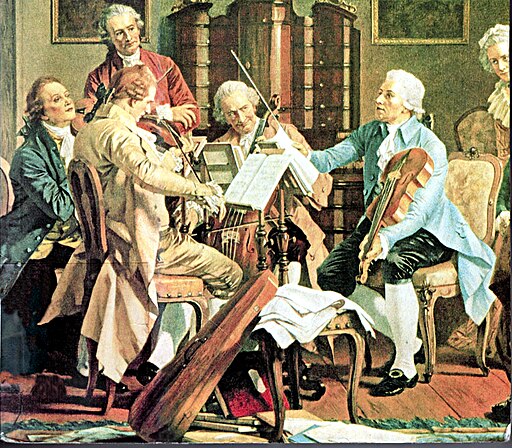
    Haydn PlayingHow to listen to Classical Music

    Pay Attention to Dynamics and Tempo

    Classical music is full of subtle changes in dynamics and tempo, which can add depth and meaning to the music. Dynamics refer to the loudness or softness of the music, while tempo refers to the speed. Paying attention to these changes can help you understand the emotions and moods conveyed by the music.

    Learn About the Composer and Historical Context

    Learning about the composer and historical context of a piece can help you appreciate it on a deeper level. Knowing about the life and experiences of the composer can provide insights into the meaning and intent of the music. Understanding the historical context can help you understand why certain pieces were written and what they were intended to convey.

    Attend Live Performances

    Attending live performances is a great way to experience classical music. Seeing the musicians perform can help you appreciate the skill and dedication required to play classical music. It can also provide a different perspective on the music and help you hear it in a new way.

    Keep an Open Mind

    Finally, it’s important to keep an open mind when listening to classical music. Not every piece will be to your taste, but by exploring different styles and composers, you might find new favorites that you never knew existed.

    In conclusion, classical music is a rich and complex genre that can be enjoyed by anyone with an open mind and a willingness to learn. By following these tips, you can start your journey into the world of classical music and discover its beauty and complexity.